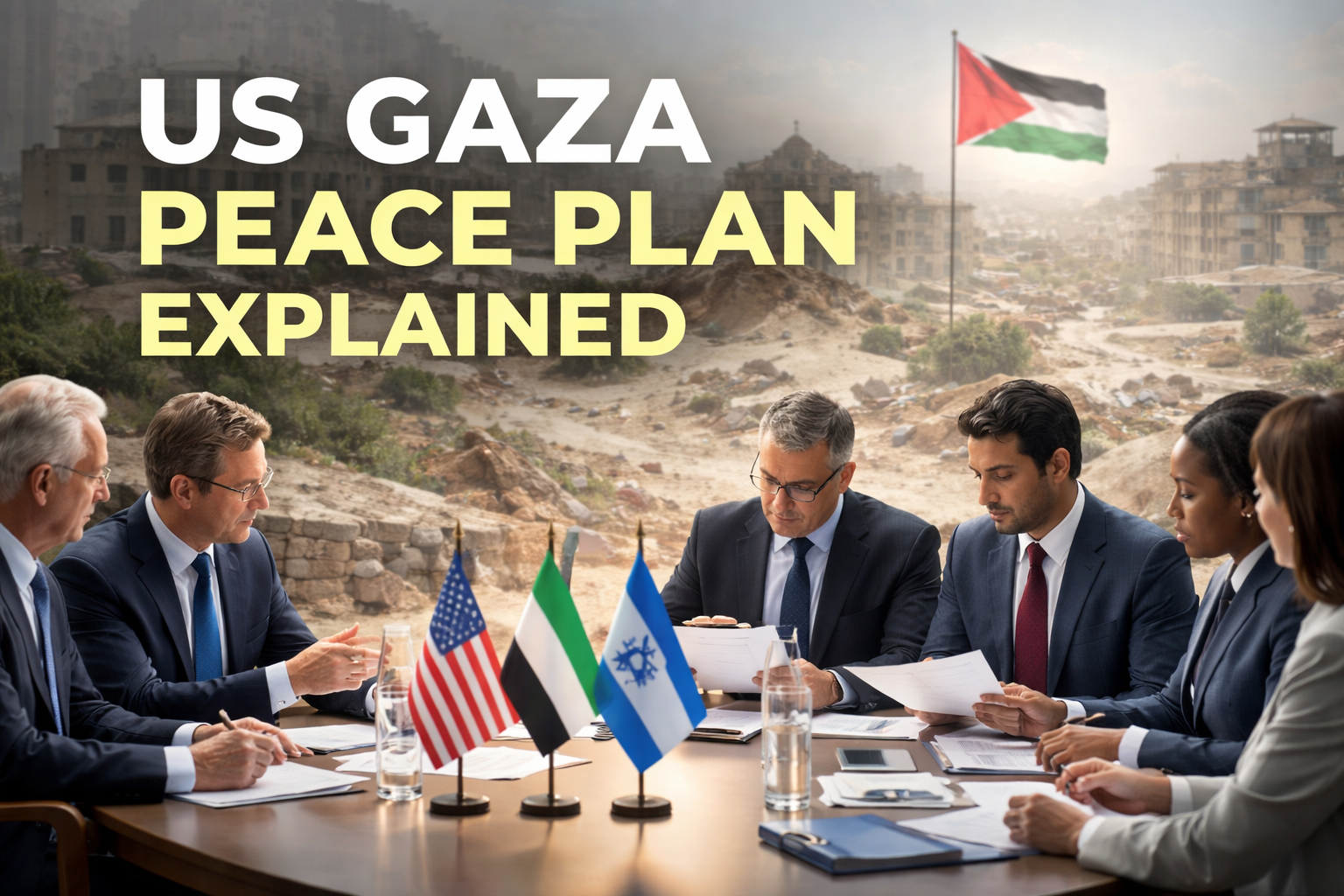
The US Gaza peace plan—officially known as the Comprehensive Plan to End the Gaza Conflict—is a major diplomatic initiative aimed at creating a lasting peace framework for the Gaza Strip and surrounding region. Announced in late 2025 and endorsed by the United Nations Security Council, the plan brings together diplomatic, governance, and reconstruction efforts designed to stabilize the area after years of conflict.
Background: Why a New Peace Plan?
The Gaza Strip, a narrow coastal territory between Israel and Egypt, has been at the center of recurring conflicts for decades. The modern conflict intensified after a significant escalation in 2023, leading to prolonged hostilities, widespread disruption of daily life, and multiple international diplomatic efforts to end the fighting.
Previous ceasefire agreements have provided temporary relief, but none fully addressed political, security, and governance concerns. In response, the United States, working with regional and international partners, proposed a broader peace initiative aiming for a more sustainable and structured transition toward peace.
Core Aims of the Plan
At its heart, the US Gaza peace plan focuses on five core objectives:
1. Ceasefire and Reduction of Hostilities
The plan calls for an immediate and sustained ceasefire to halt fighting and provide space for dialogue and reconstruction efforts. A framework was agreed in late 2025 that brought about an initial cessation of hostilities and subsequent moves toward deeper implementation.
2. Return of Hostages and Prisoner Exchanges
A central element of the peace initiative has been agreements for the release of hostages held during the conflict as well as negotiated exchanges of detainees. These measures aim to build confidence between parties and support the ceasefire’s stability.
3. Demilitarization and Security Arrangements
The plan envisions a phased approach to reducing military activity by militant groups and implementing security reforms that include international monitoring forces. These arrangements are intended to support the peace process by creating a safer environment for civilians and aid operations.
4. Transitional Governance for Gaza
A unique feature of the peace plan is the establishment of transitional governance structures. These involve a technocratic Palestinian committee to manage civil affairs in Gaza under international oversight, designed to ensure effective administration during the transition period.
5. Reconstruction and Economic Development
Rebuilding Gaza’s infrastructure and revitalizing its economy are key goals. International support for reconstruction, coordinated through newly proposed bodies, aims to improve living conditions and support longer-term stability.
Phase One: Immediate Steps Taken
After the plan’s announcement, Phase One focused on achieving a stable ceasefire and building mutual trust. This included:
- Ceasefire implementation and monitoring
- Hostage release in exchange for prisoner swaps
- Security stabilization through limited international presence
These early measures helped reduce fighting and laid the groundwork for the next phase of political and governance reforms.
Phase Two: Governance and Reconstruction
Phase Two marks an expansion of the peace plan into institutional and administrative reforms.
Transitional Governance Committee
Under U.S. guidance, a National Committee for the Administration of Gaza (NCAG) has been formed, comprising Palestinian technocrats tasked with managing civil governance—such as public services, utilities, and local administration—during the transition.
International Oversight Body: Board of Peace
A new international body, often referred to as the Board of Peace, has been proposed to oversee the peace plan’s implementation. This board includes global leaders and representatives from invited nations, with the United States playing a central role. Participation is structured to ensure diverse involvement and contributions to reconstruction and governance priorities.
Demilitarization Initiatives
Phase Two also emphasizes the voluntary demilitarization of armed groups and training of local security forces that align with the new civilian governance framework. Progress on this front is seen as crucial to long-term stability.
International Endorsement and Reactions
The peace plan has received broad endorsements from international organizations and several countries:
- United Nations Security Council formally backed the initiative in late 2025, giving it international legitimacy.
- Many Arab and Western nations welcomed the plan as a significant diplomatic step toward ending long-standing conflict.
- Governments including France, Germany, Canada, and others expressed support and willingness to participate in reconstruction efforts.
However, some nations and groups have expressed caution or concern regarding certain elements of the plan, particularly the structure of international oversight and roles of specific countries.
Stakeholder Perspectives
Palestinian Viewpoints
Responses from Palestinian leadership and communities have varied. Some welcome the governance reforms and reconstruction focus, while others highlight concerns about representation and ownership of the peace process.
Israeli Government Views
Israeli leaders have supported certain security commitments within the plan, though political debates continue about international involvement levels and impacts on national policy.
Global Opinions
International reactions range from optimism about a new diplomatic framework to caution regarding implementation complexities and long-term viability.
Challenges Ahead
Despite its broad scope, the peace plan faces several practical and political challenges:
1. Implementation and Compliance
Achieving lasting peace depends on all parties honoring ceasefire commitments and participating in negotiated reforms. Progress has been uneven, requiring ongoing diplomacy.
2. Security Sector Reform
Demilitarizing armed groups and building reliable security structures that reflect local needs and international expectations are complex and sensitive tasks.
3. Governance and Representation
Transitional administration efforts must balance expert governance with meaningful participation by local populations to build trust and legitimacy.
4. Funding and Reconstruction
Rebuilding infrastructure will require substantial international investment, careful planning, and coordination to ensure effective use of resources.
What’s Next?
The success of the Gaza peace plan hinges on continued engagement from all stakeholders—regional leaders, international partners, and the people directly affected. Key upcoming steps include:
- Expanded governance reforms under Phase Two
- Enhanced international coordination on reconstruction
- Ongoing dialogue to ensure security and economic stability
As the plan evolves, its ability to adapt to domestic and regional concerns will be central to fostering long-term stability and prosperity.
Conclusion
The US Gaza peace plan represents a comprehensive diplomatic effort to transition from conflict to a structured roadmap for governance, security, and reconstruction. While international support and early implementation steps are promising, the plan’s long-term success will depend on effective cooperation, responsiveness to local needs, and sustained commitment to inclusive peacebuilding.